






How Winter Road Salt Damages Tile and Grout in Omaha Homes

Road salt is harder on tile floors than almost anything else that comes through your door in winter. It does not just sit on the surface. It works down into grout lines, dries into a chalky film, and slowly wears away the sealant that protects your floors.


If your grout keeps looking gray no matter how often you mop, salt is a likely reason. Here is what it actually does, how to spot it early, and what to do about it before spring.

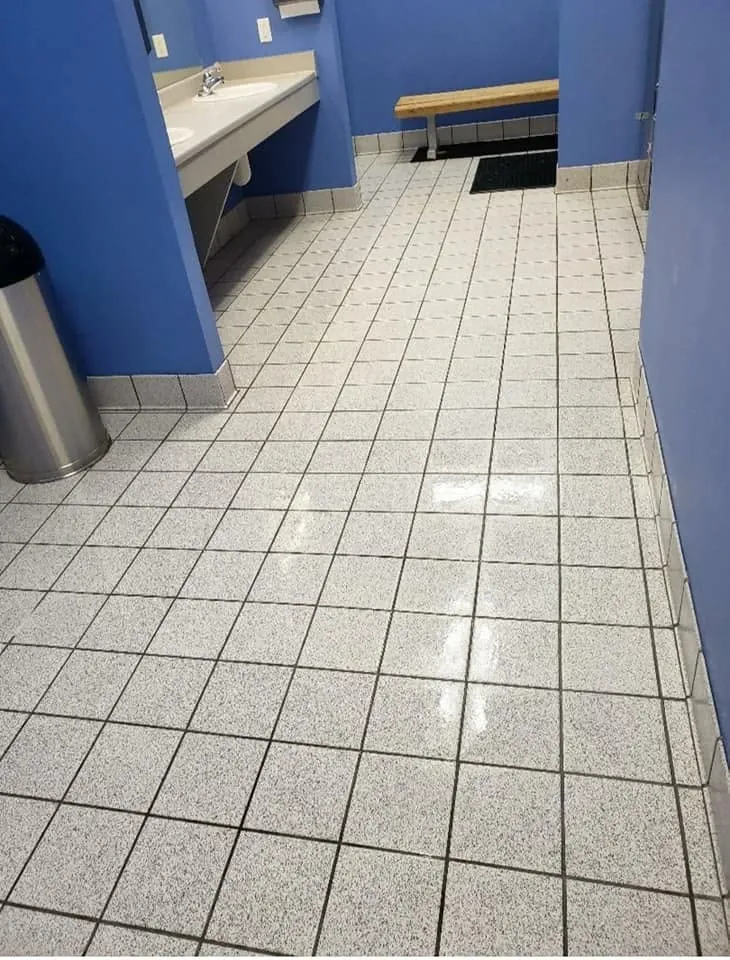
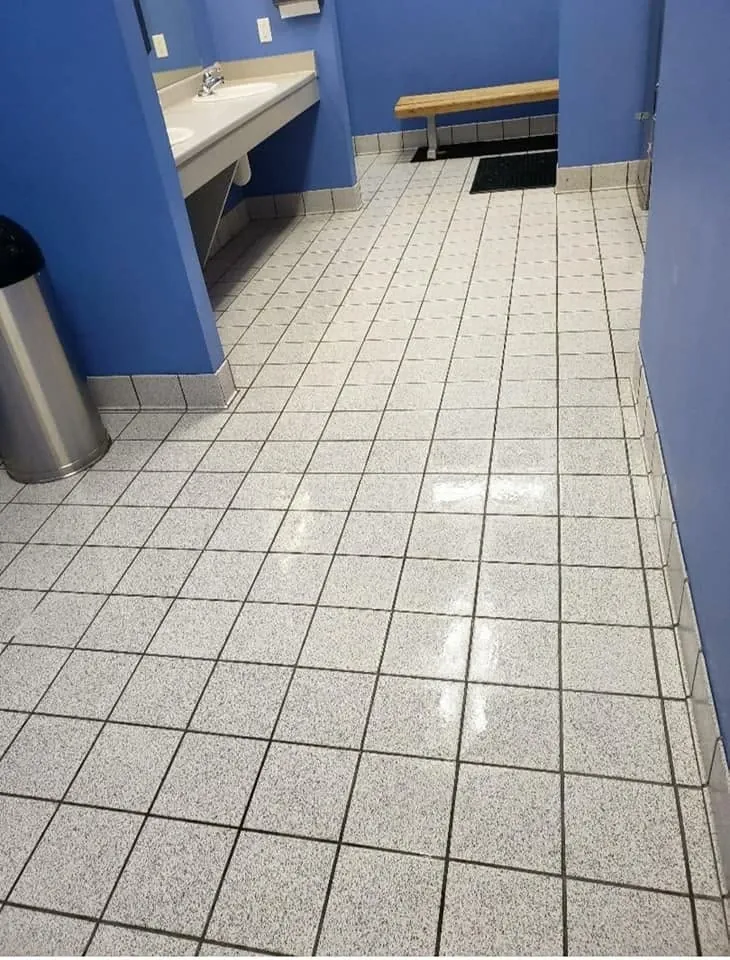
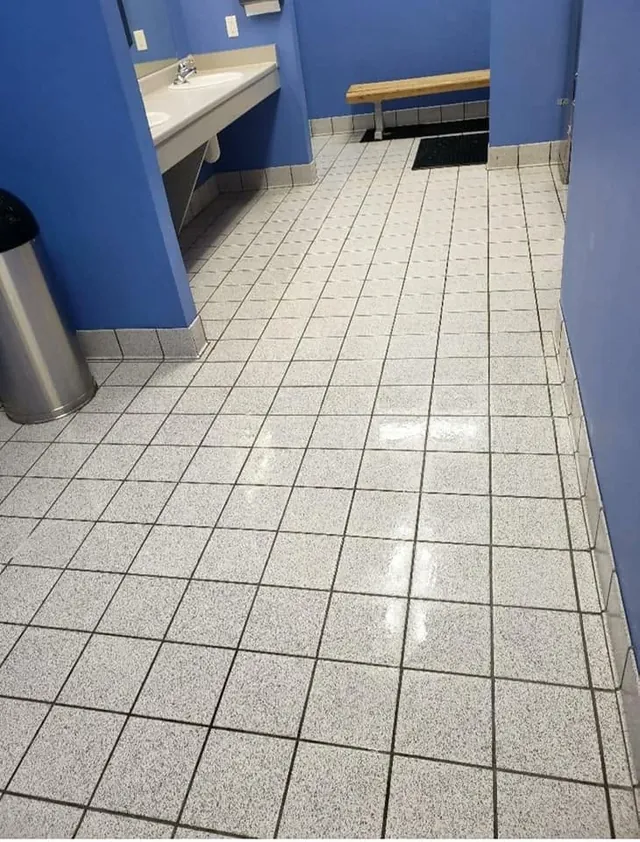
Freshly cleaned speckled white tile floor with dark grout lines in a blue-walled commercial restroom in Omaha, NE, with an entry mat by the door.

What Road Salt Does to Tile and Grout

Salt leaves behind a mineral residue that mopping spreads around instead of removing. Grout is porous, so that residue soaks in rather than sitting on top where you can reach it.


Three things happen at once over a winter:

  • Fine grit from sand and melted snow acts like sandpaper underfoot, wearing on the glaze of your tile and the surface of your grout.
  • Salt residue dries into a white, chalky film that dulls sealed stone and ceramic.
  • Trapped moisture feeds discoloration and mineral buildup deep in the grout line, and it gets harder to remove the longer it sits.


A mop and bucket will not fix any of that. Once residue is below the surface, it takes agitation and extraction to lift it out, which is the heart of professional tile and grout cleaning. The same logic applies to every hard surface in the house, and that is why routine professional floor cleaning costs far less than replacing a floor you let go too long.

Why Omaha Entryways Take the Worst of It

Entryways and mudrooms collect more salt than anywhere else in the building, because every person and pet walks the street in through them. Omaha Public Works treats city streets with a combination of salt, sand, and salt brine, and all three ride indoors on boots and tires.


From there it spreads. Kitchens and bathrooms in homes across Omaha, Bellevue, Papillion, and La Vista pick it up within a few weeks of the first treated road. Businesses see it faster, since the front door opens hundreds of times a day.


Mats and runners catch some of it, but they hold the grit rather than get rid of it, so they need attention of their own. If you keep rugs at your entries, carpet and rug cleaning belongs on the same winter schedule as your tile. For offices, clinics, and retail spaces, janitorial and commercial cleaning usually covers both at once.

How to Tell Salt Residue From Ordinary Dirt

Salt residue looks chalky and comes back fast. Ordinary dirt wipes away and stays gone for a while. Here is what to check.

What to Check Ordinary Dirt Salt Residue
Color Gray or brown, fairly even White and chalky, patchy
Timing Builds up slowly Returns within a day of mopping
Location Spread across the room Heaviest within ten feet of a door
Texture Smooth once wiped Gritty underfoot
Response to mopping Lifts and stays gone Smears, then dries back in

Any of these point to buildup that has settled deeper than a surface clean can reach. Catching it early is easier and cheaper than dealing with permanently stained grout in March.

What to Do After Each Snow Event

A few minutes of work after each storm keeps most of the salt out of your grout in the first place.


  1. Shake out and dry your entry mats instead of leaving them damp on the tile.
  2. Sweep or vacuum the first ten feet inside each door before you mop, so you lift the grit instead of grinding it in.
  3. Mop with a neutral cleaner, then go back over the floor with plain water, which pulls salt out instead of leaving it behind.
  4. Wipe up standing meltwater near doors rather than letting it dry in place.
  5. Watch the forecast on the National Weather Service Omaha winter page so your mats are down before a storm, not after.


Carpets by the same doors need the same care. Our guide to how often to clean rugs and carpets gives you a reasonable schedule to work from.

When to Bring in a Professional

Plan on one deep clean in midwinter and another after the last freeze, or call sooner if your grout has already darkened and will not come back.


A thorough visit starts with an assessment of your tile type and grout condition, since not every floor is treated the same way. Natural stone needs gentler products than ceramic or porcelain so the surface does not etch. After that, heavily soiled areas near entry points are pretreated, and deep extraction pulls grime out of the grout rather than wiping it across the surface. If your grout is unsealed, or the sealant has worn thin, resealing afterward is what keeps the next round of salt out.


There is a point where cleaning stops helping. If grout is cracked or crumbling, or the tile itself has started to lift, you are past a cleaning problem. It is worth reading the signs it is time to replace your flooring before you spend money on a deep clean that will not hold.

Close-up of a tile floor in an Omaha, NE entryway showing darkened grout lines and a chalky white salt film along the tile edges.

FAQs About Winter Salt Damage to Tile and Grout

  • How often should tile floors be professionally cleaned in Omaha?

    Most entryways and high-traffic tile do well with a professional cleaning once or twice a year. Winter is the one to prioritize, because that is when salt and slush exposure peaks.

  • Can professional cleaning remove grout stains caused by road salt?

    In most cases, yes. Deep extraction lifts embedded salt residue that mopping cannot reach. Heavily stained or unsealed grout may need a sealing step afterward for the result to last.

  • Does sealing grout prevent salt damage?

    Sealing does not make grout salt-proof, but it slows absorption considerably. A sealed grout line gives you time to clean up meltwater before it carries salt down into the joint.

  • Should I clean tile in the middle of winter or wait until spring?

    Both, if the floor takes heavy traffic. A midwinter clean stops residue from setting, and a spring clean clears whatever built up over the rest of the season.

  • Is professional tile cleaning safe for homes with pets or children?

    Yes, when the technician uses products matched to your floor and rinses properly. Ask what is being applied and how long the floor needs to dry before anyone walks on it.

Schedule Your Winter Tile and Grout Cleaning

Salt damage is easier to stop than to undo. If your tile has lost its shine or your grout is darkening near the doors, Big Red Flooring can take a look before another month of slush goes by. Call (402) 413-5080 or get in touch to schedule a visit.

Recent Posts

Bedroom with light blonde oak wood-look plank flooring, a gray upholstered bed, and sheer curtains at the window
November 6, 2026
Warm oak and greige floors are replacing gray in Omaha, NE. Learn how to match a warm tone to your light, room size, trim, and daily foot traffic.

Big Red Flooring office and showroom at 8910 Washington Circle in Omaha, NE
October 14, 2026
Hiring office cleaning in Omaha, NE? Learn which credentials, scope details, and red flags to check before you sign. Call Big Red Flooring at (402) 413-5080.

Newly installed carpet in an empty Omaha, NE bedroom after a one-day floor installation
October 14, 2026
How long does floor installation take in Omaha? See timelines by material, what causes delays, and how to plan ahead. Call Big Red Flooring at (402) 413-5080.
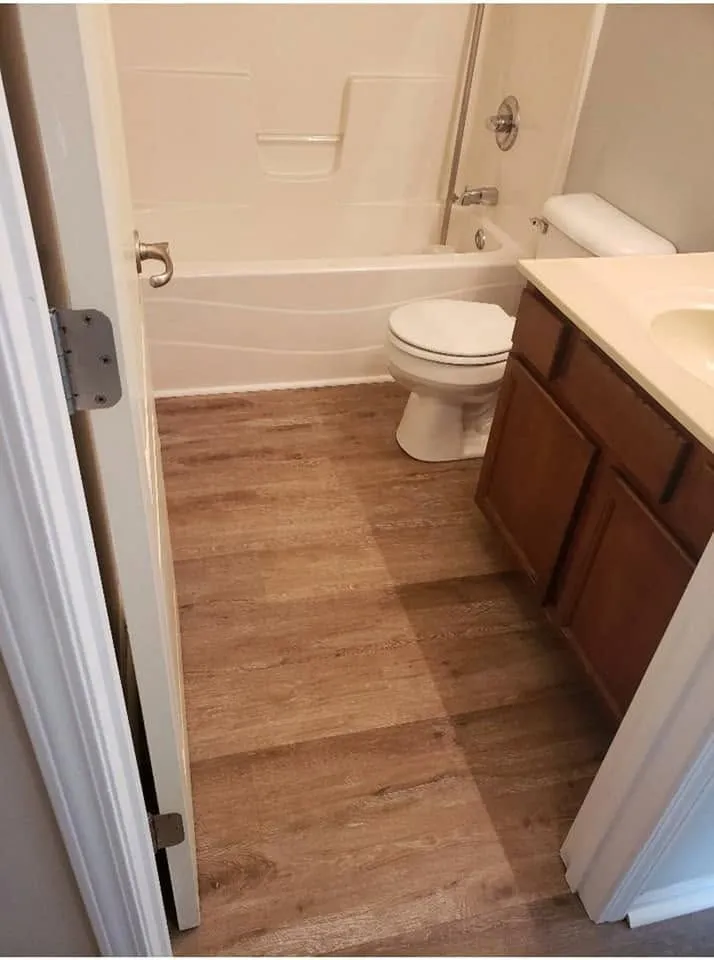
Local janitorial Omaha, NE in a restroom
September 7, 2026
Local janitorial Omaha NE services save you time and money. Learn the commercial cleaning benefits Omaha businesses see first. Call (402) 413-5080 today.
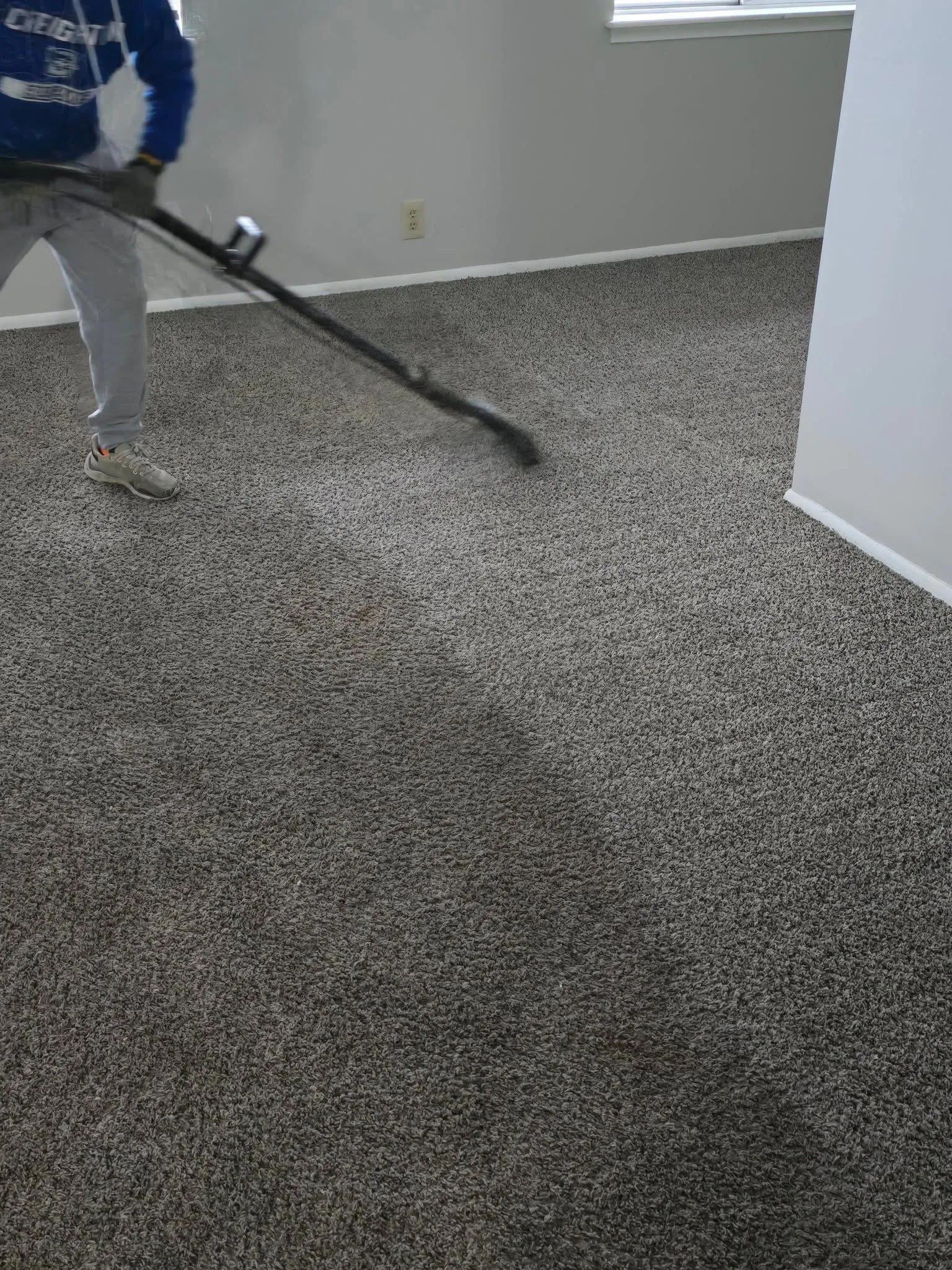
Deep carpet cleaning Omaha NE technician using hot water extraction in a home
September 7, 2026
Why deep carpet cleaning in Omaha protects your family's health and your carpet's lifespan. Call Big Red Flooring at (402) 413-5080 for an estimate today.

Hardwood flooring installation in Omaha, NE
August 5, 2026
Compare hardwood vs. vinyl flooring for Omaha homes, including cost, maintenance, moisture, pets, best rooms, durability, and climate considerations.
Bedroom with light blonde oak wood-look plank flooring, a gray upholstered bed, and sheer curtains at the window
November 6, 2026
Warm oak and greige floors are replacing gray in Omaha, NE. Learn how to match a warm tone to your light, room size, trim, and daily foot traffic.
Big Red Flooring office and showroom at 8910 Washington Circle in Omaha, NE
October 14, 2026
Hiring office cleaning in Omaha, NE? Learn which credentials, scope details, and red flags to check before you sign. Call Big Red Flooring at (402) 413-5080.
Newly installed carpet in an empty Omaha, NE bedroom after a one-day floor installation
October 14, 2026
How long does floor installation take in Omaha? See timelines by material, what causes delays, and how to plan ahead. Call Big Red Flooring at (402) 413-5080.
Local janitorial Omaha, NE in a restroom
September 7, 2026
Local janitorial Omaha NE services save you time and money. Learn the commercial cleaning benefits Omaha businesses see first. Call (402) 413-5080 today.
Deep carpet cleaning Omaha NE technician using hot water extraction in a home
September 7, 2026
Why deep carpet cleaning in Omaha protects your family's health and your carpet's lifespan. Call Big Red Flooring at (402) 413-5080 for an estimate today.
Hardwood flooring installation in Omaha, NE
August 5, 2026
Compare hardwood vs. vinyl flooring for Omaha homes, including cost, maintenance, moisture, pets, best rooms, durability, and climate considerations.

Contact Us For An Estimate


Ready to transform your space? Call us at (402) 413-5080 or visit us at 8910 Washington Cir, Omaha, NE 68127. Whether you’re looking to buy new flooring, clean your carpets, or need emergency assistance, Big Red Flooring is here to help. Experience the difference with Omaha’s trusted flooring experts.

How Winter Road Salt Damages Tile and Grout in Omaha Homes

Road salt is harder on tile floors than almost anything else that comes through your door in winter. It does not just sit on the surface. It works down into grout lines, dries into a chalky film, and slowly wears away the sealant that protects your floors.


If your grout keeps looking gray no matter how often you mop, salt is a likely reason. Here is what it actually does, how to spot it early, and what to do about it before spring.

Freshly cleaned speckled white tile floor with dark grout lines in a blue-walled commercial restroom in Omaha, NE, with an entry mat by the door.

What Road Salt Does to Tile and Grout

Salt leaves behind a mineral residue that mopping spreads around instead of removing. Grout is porous, so that residue soaks in rather than sitting on top where you can reach it.


Three things happen at once over a winter:

  • Fine grit from sand and melted snow acts like sandpaper underfoot, wearing on the glaze of your tile and the surface of your grout.
  • Salt residue dries into a white, chalky film that dulls sealed stone and ceramic.
  • Trapped moisture feeds discoloration and mineral buildup deep in the grout line, and it gets harder to remove the longer it sits.


A mop and bucket will not fix any of that. Once residue is below the surface, it takes agitation and extraction to lift it out, which is the heart of professional tile and grout cleaning. The same logic applies to every hard surface in the house, and that is why routine professional floor cleaning costs far less than replacing a floor you let go too long.

Why Omaha Entryways Take the Worst of It

Entryways and mudrooms collect more salt than anywhere else in the building, because every person and pet walks the street in through them. Omaha Public Works treats city streets with a combination of salt, sand, and salt brine, and all three ride indoors on boots and tires.


From there it spreads. Kitchens and bathrooms in homes across Omaha, Bellevue, Papillion, and La Vista pick it up within a few weeks of the first treated road. Businesses see it faster, since the front door opens hundreds of times a day.


Mats and runners catch some of it, but they hold the grit rather than get rid of it, so they need attention of their own. If you keep rugs at your entries, carpet and rug cleaning belongs on the same winter schedule as your tile. For offices, clinics, and retail spaces, janitorial and commercial cleaning usually covers both at once.

How to Tell Salt Residue From Ordinary Dirt

Salt residue looks chalky and comes back fast. Ordinary dirt wipes away and stays gone for a while. Here is what to check.

What to Check Ordinary Dirt Salt Residue
Color Gray or brown, fairly even White and chalky, patchy
Timing Builds up slowly Returns within a day of mopping
Location Spread across the room Heaviest within ten feet of a door
Texture Smooth once wiped Gritty underfoot
Response to mopping Lifts and stays gone Smears, then dries back in

Any of these point to buildup that has settled deeper than a surface clean can reach. Catching it early is easier and cheaper than dealing with permanently stained grout in March.

What to Do After Each Snow Event

A few minutes of work after each storm keeps most of the salt out of your grout in the first place.


  1. Shake out and dry your entry mats instead of leaving them damp on the tile.
  2. Sweep or vacuum the first ten feet inside each door before you mop, so you lift the grit instead of grinding it in.
  3. Mop with a neutral cleaner, then go back over the floor with plain water, which pulls salt out instead of leaving it behind.
  4. Wipe up standing meltwater near doors rather than letting it dry in place.
  5. Watch the forecast on the National Weather Service Omaha winter page so your mats are down before a storm, not after.


Carpets by the same doors need the same care. Our guide to how often to clean rugs and carpets gives you a reasonable schedule to work from.

When to Bring in a Professional

Plan on one deep clean in midwinter and another after the last freeze, or call sooner if your grout has already darkened and will not come back.


A thorough visit starts with an assessment of your tile type and grout condition, since not every floor is treated the same way. Natural stone needs gentler products than ceramic or porcelain so the surface does not etch. After that, heavily soiled areas near entry points are pretreated, and deep extraction pulls grime out of the grout rather than wiping it across the surface. If your grout is unsealed, or the sealant has worn thin, resealing afterward is what keeps the next round of salt out.


There is a point where cleaning stops helping. If grout is cracked or crumbling, or the tile itself has started to lift, you are past a cleaning problem. It is worth reading the signs it is time to replace your flooring before you spend money on a deep clean that will not hold.

Close-up of a tile floor in an Omaha, NE entryway showing darkened grout lines and a chalky white salt film along the tile edges.

FAQs About Winter Salt Damage to Tile and Grout

  • How often should tile floors be professionally cleaned in Omaha?

    Most entryways and high-traffic tile do well with a professional cleaning once or twice a year. Winter is the one to prioritize, because that is when salt and slush exposure peaks.

  • Can professional cleaning remove grout stains caused by road salt?

    In most cases, yes. Deep extraction lifts embedded salt residue that mopping cannot reach. Heavily stained or unsealed grout may need a sealing step afterward for the result to last.

  • Does sealing grout prevent salt damage?

    Sealing does not make grout salt-proof, but it slows absorption considerably. A sealed grout line gives you time to clean up meltwater before it carries salt down into the joint.

  • Should I clean tile in the middle of winter or wait until spring?

    Both, if the floor takes heavy traffic. A midwinter clean stops residue from setting, and a spring clean clears whatever built up over the rest of the season.

  • Is professional tile cleaning safe for homes with pets or children?

    Yes, when the technician uses products matched to your floor and rinses properly. Ask what is being applied and how long the floor needs to dry before anyone walks on it.

Schedule Your Winter Tile and Grout Cleaning

Salt damage is easier to stop than to undo. If your tile has lost its shine or your grout is darkening near the doors, Big Red Flooring can take a look before another month of slush goes by. Call (402) 413-5080 or get in touch to schedule a visit.

Recent Posts

Bedroom with light blonde oak wood-look plank flooring, a gray upholstered bed, and sheer curtains at the window
November 6, 2026
Warm oak and greige floors are replacing gray in Omaha, NE. Learn how to match a warm tone to your light, room size, trim, and daily foot traffic.
Big Red Flooring office and showroom at 8910 Washington Circle in Omaha, NE
October 14, 2026
Hiring office cleaning in Omaha, NE? Learn which credentials, scope details, and red flags to check before you sign. Call Big Red Flooring at (402) 413-5080.
Newly installed carpet in an empty Omaha, NE bedroom after a one-day floor installation
October 14, 2026
How long does floor installation take in Omaha? See timelines by material, what causes delays, and how to plan ahead. Call Big Red Flooring at (402) 413-5080.
Local janitorial Omaha, NE in a restroom
September 7, 2026
Local janitorial Omaha NE services save you time and money. Learn the commercial cleaning benefits Omaha businesses see first. Call (402) 413-5080 today.
Deep carpet cleaning Omaha NE technician using hot water extraction in a home
September 7, 2026
Why deep carpet cleaning in Omaha protects your family's health and your carpet's lifespan. Call Big Red Flooring at (402) 413-5080 for an estimate today.
Hardwood flooring installation in Omaha, NE
August 5, 2026
Compare hardwood vs. vinyl flooring for Omaha homes, including cost, maintenance, moisture, pets, best rooms, durability, and climate considerations.

Contact Us For An Estimate


Ready to transform your space? Call us at (402) 413-5080 or visit us at 8910 Washington Cir, Omaha, NE 68127. Whether you’re looking to buy new flooring, clean your carpets, or need emergency assistance, Big Red Flooring is here to help. Experience the difference with Omaha’s trusted flooring experts.